 June 8, 2026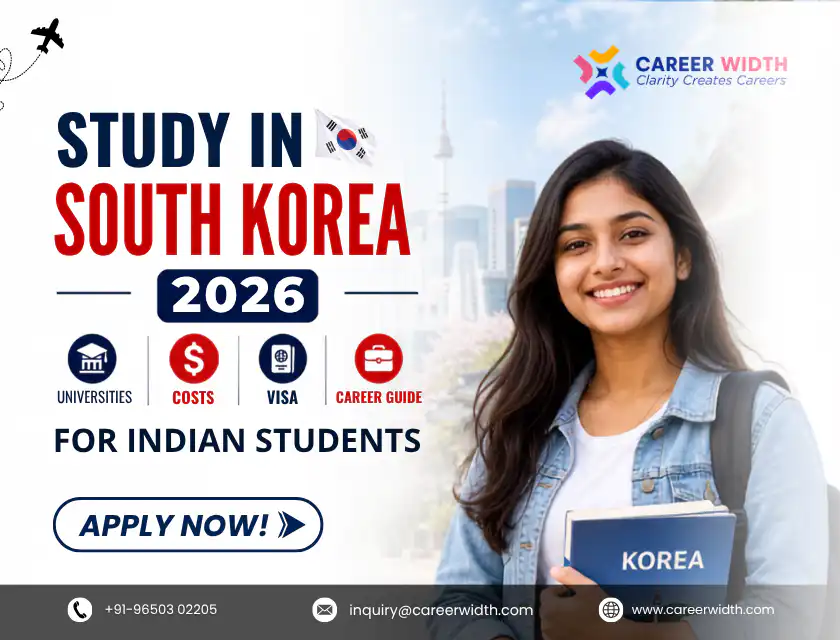
Yes, Study in Korea for Indian students is gaining immense popularity with economical tuition fees, world-ranked universities and great job prospects. Their interest in the advancement of technology, innovation, and research have been leading many international students to come to study there in thousands every year. Apart from the scholarships, up-to-date infrastructure and a safe residential environment, South Korea education is also very favourable for Indian students looking to achieve their international education goals.
South Korea has emerged as one of the most preferred study destinations for students, owing to its quality education offered through some of the top universities in South Korea along with amazing research opportunities and global career exposure. It’s also extremely technologically advanced, economically booming, and home to some of the best universities all around the world. So expect academic excellence along bridging with culture as well. International (though this is actually aimed for Indian Students)Education in South Korea, cheaper colleges, scholarships and enormous job opportunities in emerging industries.
This blog tells you all there is to know about study in South Korea, like the universities, admission requirements, costs, scholarship process and visa details as well as career opportunities for anyone planning to study in South Korea in 2026.
Table of Contents
ToggleWhy Choose South Korea for Higher Education?
South Korea’s education has gotten way more popular over the past decade. They’ve put tons of money into research, innovation, and buildings for learning, becoming one of Asia’s top spots for studies. International students dig it there for several reasons, including:
International students like it there for several reasons, though.
- Globally ranked universities
- Low tuition fees as compared to Western countries.
- Expanded government international study support
- Numerous scholarship opportunities
- Safe and technologically advanced environment
- International graduates have a broadening job market
- Excellent research facilities
- High quality of life
South Korea has world class institutions that usually rank at the top universities in the world. Internationally recognized, degrees obtained from Korean institutions provide pathways for employment around the world.
The industry-oriented education system of South Korean schools is beneficial to students studying engineering, computer science, artificial intelligence (AI), business management (BM), biotechnology and media studies and international relations.
Featured news story for many aspirants planning to Study in Korea for Indian students It is cost-effective and high-quality education so the country could really be seen as a great alternative destination from countries like United States of America, Canada, Australia.
South Korean Higher Education System
The South Korea education system is one of the strongest in terms of research, innovations and hard work.
In South Korea, higher education institutions typically belong to one of three groups:
- Public Universities
They are publicly funded by the government and normally charge lower fees. They are one of the most reputable with regards to research and academic excellence.
- Private Universities
Higher Education in South Korea: Major Private Institutions. Most of the top-ranked universities in the country fall into this category.
- Specialized Institutions
These institutes focus and offer their own specific discipline for example science, technology, arts and business.
Degree Structure
Degree Level | Duration |
Bachelor’s Degree | 4 Years |
Master’s Degree | 2 Years |
Doctoral Degree (PhD) | 3–5 Years |
Diploma Programs | 1–2 Years |
Most programs are conducted in Korean, but many universities now offer English-language programs to cater specifically to international students.
This broadening of opportunity has been great for Korean university entry-level, graduate level International Students and leading to a world-recognised qualification.
Top South Korea Universities for International Students
Your choice of university is one of the most important decisions you will make as you plan to Study in South Korea. The country is home to a few of the globally recognized educational institutions for outstanding academics and research work.
Leading Universities in South Korea
University | QS Ranking Range | Popular Programs |
Seoul National University | Top 50 | Engineering, Business, Medicine |
Korea University | Top 100 | Business, Law, International Studies |
Yonsei University | Top 100 | Engineering, Media, Management |
KAIST | Top 100 | Technology, AI, Computer Science |
POSTECH | Top 150 | Engineering, Research |
Sungkyunkwan University | Top 150 | Business, Technology |
Hanyang University | Top 200 | Engineering, Architecture |
Kyung Hee University | Top 300 | Hospitality, Business |
These South Korea universities receive thousands of students from across the globe every year for great education and also links to industry.
Popular Fields of Study
Students commonly choose:
- Artificial Intelligence
- Data Science
- Computer Engineering
- Mechanical Engineering
- Biotechnology
- International Business
- Media and Communication
- Korean Studies
- Hospitality Management
- Design and Fashion
Many of the universities are in collaboration with big multinational companies, providing opportunities for internships and jobs to the students after they complete their graduation.
South Korea University Admission Process
A good application depends on understanding how the South Korea university admission process works.
Most of the Universities go for 2-times admissions a year:
Intake | Application Period |
Spring Intake | September – November |
Fall Intake | March – May |
Admission Requirements for Undergraduate Programs
Students generally need:
- Class 12 completion certificate
- Academic transcripts
- Statement of Purpose (SOP)
- Letters of Recommendation
- Passport copy
- Proof of English proficiency
- Financial documents
Admission Requirements for Master’s Programs
Applicants usually require:
- Bachelor’s degree
- Academic transcripts
- Research proposal (where applicable)
- Recommendation letters
- Language proficiency scores
English Language Requirements
Most English-taught programs accept:
- IELTS
- TOEFL
- PTE Academic
Typical requirements include:
Test | Minimum Score |
IELTS | 6.0 – 6.5 |
TOEFL iBT | 80 – 90 |
PTE | 55 – 65 |
Depending on the program and level of study, some universities have different requirements.
The South Korea university admission process generally lasts from 3 to 6 months between the moment of application submission and the final acceptance response.
Cost of Studying in South Korea
One of the greatest benefits of studying in Korea is the low cost.
The cost of studying in South Korea is still far below the majority Western points.
Tuition Fees
Program | Annual Tuition Cost |
Undergraduate | USD 3,000–8,000 |
Master’s | USD 4,000–10,000 |
PhD | USD 3,000–8,000 |
Accommodation Costs
Accommodation Type | Monthly Cost |
University Dormitory | USD 200–500 |
Shared Apartment | USD 300–700 |
Private Apartment | USD 600–1,200 |
Monthly Living Expenses
Expense Category | Average Monthly Cost |
Food | USD 200–400 |
Transportation | USD 40–80 |
Internet & Phone | USD 30–60 |
Personal Expenses | USD 100–250 |
Estimated Annual Budget
Expense | Cost |
Tuition | USD 4,000–10,000 |
Living Expenses | USD 5,000–8,000 |
Health Insurance | USD 300–600 |
Miscellaneous | USD 500–1,000 |
On average, the total Cost of studying in South Korea ranges from USD 10,000 to a maximum of USD 18,000 per year depending on lifestyle and choice of university.
Scholarships in South Korea for Indian Students
Opportunities for financial assistance have expanded rapidly over the past few years.
South Korea scholarship will help significantly reduce the higher education of foreign students.
- Global Korea Scholarship (GKS)
One of the most prestigious types of government-funded scholarship programs is the Global Korea Scholarship.
Benefits include:
- Full tuition coverage
- Monthly stipend
- Airfare
- Settlement allowance
- Health insurance
- Research support
- University Scholarships
Most South Korea universities offer merit based scholarships that cover:
- 30% tuition waiver
- 50% tuition waiver
- Full tuition waiver
- Research Assistantships
Graduate students can receive:
- Monthly salary
- Tuition reductions
- Research funding
- Corporate Scholarships
The Korean economic establishment likewise gives merits to college gold scholars and the students abroad by way of looking for strength in technical and designing measures.
Scholarships also allow many students aspiring to Study in Korea for Indian students to experience higher education at a much lower cost.
South Korea Student Visa Requirements
Getting a South Korea student visa post-admission offer is an important step.
The primary visa categories include:
Visa Type | Purpose |
D-2 Visa | Degree Programs |
D-4 Visa | Language Courses |
Documents Required
Applicants generally need:
- Valid passport
- Admission letter
- Visa application form
- Passport-size photographs
- Financial proof
- Academic certificates
- Tuition payment receipt
Financial Requirements
Students must prove adequate resources for:
- Tuition fees
- Living expenses
- Accommodation costs
Visa Processing Time
Processing typically takes:
- 2–6 weeks
The student visa process from South Korea is quite easy, provided that all the papers have been filed correctly.
Students must submit their application within a week of receipt of their Certificate of Admission.
Student Life and Cultural Experience in South Korea
Studying abroad is about much more than classes and grades. South Korea has an ever-evolving culture in which students experience a refreshing blend of both tradition and modernity.
International students enjoy:
- Advanced public transportation
- Safe cities
- Modern infrastructure
- Rich cultural festivals
- Global student communities
Popular student cities include:
- Seoul
- Busan
- Daejeon
- Daegu
- Incheon
Universities host orientations, Korean language courses, and cultural events from which students can assimilate into Korea.
One far more novelties Institution presents helps one participate in clubs research teams exchanges increasing your individuality and professional growth development.
For someone considering Korean universities for international students, campus life is probably the biggest draw. Employability is one of the biggest worries for international students
South Korea Jobs for Students and Post-Study Opportunities
A key concern among international students is employability. Fortunately, South Korean jobs for students have become more available.
Part-Time Work Opportunities
International students can apply for student visa after completing visa conditions and part-time work.
Common jobs include:
- English tutoring
- Restaurant work
- Retail positions
- Administrative assistance
- Campus jobs
Average earnings range between:
- KRW 10,000–15,000 per hour
Industries Hiring International Graduates
Major sectors include:
- Information Technology
- Artificial Intelligence
- Electronics
- Automotive
- Biotechnology
- Finance
- International Business
Post-Study Work Opportunities
After males have jobs, they can apply for employment visas.
Major employers include:
- Samsung
- Hyundai
- LG
- SK Group
- Naver
- Kakao
The demand for skilled international talent bolsters South Korea jobs for students and graduates.
Career Prospects After Studying in South Korea
A degree from a good Korean university can really enhance a student’s career.
Graduates benefit from:
- International work exposure
- Industry-linked education
- Strong research experience
- Global networking opportunities
Entry Level Average Starting Salaries by Field:
Industry | Average Starting Salary |
Engineering | USD 30,000–45,000 |
IT & AI | USD 35,000–55,000 |
Business | USD 30,000–50,000 |
Research | USD 30,000–60,000 |
Graduates have also taken up employment in multinational corporations across Asia, Europe and North America as well as India.
The growing nexus between South Korea and India will create more jobs for scholars who are back home after the completion of education.
Counsellor’s Perspective
According to career counselors at Career Width, South Korea is really shaping up as a top spot for Indian students looking for high-quality, yet affordable education. Many students overlook how valuable a degree from Korea can be, especially in fields like tech, engineering, and business. To attract more students, Korean universities are pouring money into making their courses more global. They’re offering classes in English and partnering with big companies. If you’re planning to apply, counselors say you should start at least a year ahead of time. Also, check out scholarships and try to pick up some basic Korean. Doing these things will make your studies easier and boost your job prospects when you graduate.
Conclusion
Studying in South Korea will be so much more than just getting a degree. Students avail themselves of globally recognized South Korea universities, high-quality education, a plethora of sectors to research and job offers. Cheap tuition fees, a variety of South Korea scholarship options for international students, an easy-to-follow process to apply for the South Korean student visa and become eligible for the increasing amount of internships available in South Korea jobs for students has consolidated the nation as one of Asia’s most sought-after study destinations.
If you are a student who is considering the journey of international education in 2026, South Korea would be an incredible option with a perfect balance of quality higher education, affordability as well as cultural exposure plus long-term career development. In fact, professional consultants such as Career Width can make the admission process doable and assist students in identifying which university is best for them, which scholarship to pursue and the perfect career pathway
FAQs | Study in South Korea 2026
How much does it cost for Indian students to study in South Korea?
The Cost of study in South Korea is usually between USD 10,000 to USD 18,000 per annum covering both tuition and living costs. Tuition for international schools can also vary between universities and programs, but general accommodation rates, food, and transport costs remain cheap compared to many Western countries. Scholarships and part-time jobs within course material help students save even more money.
How Do Students Can Get South Korea Scholarship In India?
There are mainly two types of funded programs that offer a South Korea scholarship to Indian students: Government-funded scholarships (Global Korea Scholarship– GKS) University-level scholarships Research Assistantships Most scholarships take into account academic performance, leadership potential, and extracurricular achievements. This means that the best way to get financial aid is to apply early and maintain good grades.
What Are The Process & Requirements For A South Korea Student Visa?
The typical documents the students would be needing to secure a South Korea student visa, include an accredited university admission letter, valid passport, financial proof, academic documents along with an application form. The visa application is usually relatively simple and takes approx. 2 to 6 weeks. All students must submit the documents correctly, it should only delay visa approval.
Are there jobs in South Korea for students during and after studies?
Yes, there are a lot of jobs in South Korea if you are studying or after your studies. International students in these areas have the opportunity to work while studying part-time in retail, hospitality and tutoring or campus-based roles. After completing the course, candidates can find opportunities in IT, engineering, artificial intelligence, business and research. Top global companies that are located in Korea or outside also recruit graduates from leading South Korean universities.
Check Out – Best Study Abroad Consultants in Delhi
Want To Stay Updated With Latest Study Abroad News & Updates?

An SEO Expert, Website Developer and Digital Marketer with 3+ years of experience – driving traffic, leads, growth, branding, and online success.