 September 11, 2026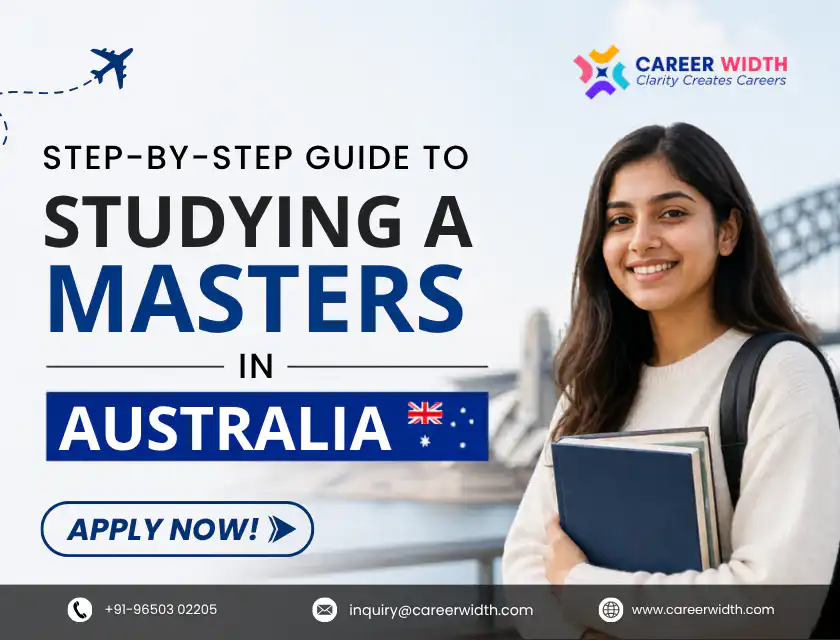
Most Master’s programs require around 6.5 overall in IELTS, but requirements vary by university and course. Always check the specific course requirements before applying.
Thinking about studying abroad after graduation but not sure where to start?
Suppose studying your masters in Australia has caught your attention. In that case, you are probably choosing among the most prestigious universities globally, with various study options, welcoming cities, and the possibility of getting work experience during your studying.
The thrilling truth, however, is that picking out a university is not all about it. You have to figure out the “where,” “when,” “how” and “what” of studying in Australia.
So, if you are wondering how to study masters in Australia, this guide takes you through the process step by step- without making it sound more complicated than it needs to be.
Table of Contents
ToggleWhy Study a Master’s in Australia?
Australia is a popular spot for international students who want further studies after finishing their bachelor degree. One of the best advantages is the range of courses offered. Depending on the candidate’s previous studies and career goals, they can pursue fields such as :
- Business and Management
- Information Technology
- Data Science and Artificial Intelligence
- Engineering
- Finance and Accounting
- Public Health
- Biotechnology
- Education
- Cybersecurity
- Project Management
- Environmental Science
- Architecture and Design
Another plus point is flexibility. Many universities provide various learning styles, entry routes and course formats, enabling students with varied educational qualifications to find an appropriate program.
But don’t pick Australia just for the sake of its popularity.
Ask yourself: “Will this course help me reach my career goal?”
That question should be the connecting link in your choice of university and program.
Step 1: Choose Your Course and University
The initial step in starting the masters application process Australia begins with the choice of a specific area of studies.
It may seem clear, but many students make the wrong call by looking at university rankings instead of career prospects.
For instance, when you have already earned your Bachelor’s degree in Computer Applications and are now thinking of moving to AI, you might want to do a master’s in Artificial Intelligence, Data Science, or Computer Science rather than sticking to the best university you can think of.
Popular Universities for Master’s Programs in Australia
Some well-known Australian universities include:
University | Popular Study Areas |
University of Melbourne | Business, Engineering, IT, Law |
Australian National University | Science, IT, Public Policy |
University of Sydney | Business, Engineering, Architecture |
UNSW Sydney | Engineering, Finance, Data Science |
Monash University | Business, IT, Pharmacy, Education |
University of Queensland | IT, Business, Environmental Science |
University of Adelaide | Engineering, Agriculture, Data Science |
University of Technology Sydney | IT, Design, Business, Communication |
University rankings can be useful, but they should not be your only deciding factor.
How to Choose the Right University
Before applying, compare:
- Course structure- Look at the subjects you will actually study. Two universities may offer the same degree title but have completely different subjects.
- Entry requirements- Check academic requirements, English-language scores, prerequisite subjects and work experience requirements.
- Location- Sydney and Melbourne are major student destinations, but cities such as Adelaide, Brisbane, Perth and Canberra can also offer excellent study options.
- Total cost- Don’t look only at tuition fees. Rent, transport, food, insurance and other everyday expenses also matter.
- Career opportunities- Check internships, industry projects, career services and employer connections associated with the course.
A useful rule
Don’t submit applications to universities simply because others have received offers. Your profile’s academic aspects, financial capacity, educational background and career aspirations will differ from others.
Step 2: Check Your Eligibility
Before you decide on a certain university, you need to confirm whether or not you fulfill the entry criteria.
Requirements for studying master’s in Australia depend on university and program. There is no common percentage or score of a test ensuring admission in any institution.
Master’s Eligibility Requirements in Australia
Most universities will look at some combination of:
Requirement | What Universities Usually Look For |
Bachelor’s degree | A recognised undergraduate qualification |
Academic performance | Varies by university and course |
English proficiency | IELTS, PTE, TOEFL or another accepted test |
Relevant subjects | Required for some specialised programs |
Work experience | Required for certain professional programs |
SOP/Personal Statement | Required by some universities |
LORs | Required for selected programs |
Portfolio | Common for design, architecture and creative courses |
What Percentage Do You Need?
In Australia, there isn’t a fixed minimum percentage requirement that applies to all universities.
Some programs might take students possessing average grades, while other more competitive degrees might require better performance on the academic program.
It is, therefore, a misconception that poor-performing students shouldn’t even bother applying to universities in Australia.
There might be universities, programs, or pathways providing suitable options for them.
English-Language Requirements
Many universities accept IELTS, PTE Academic or TOEFL, although the required score depends on the institution and course.
A common range for postgraduate courses is around:
- IELTS: around 6.5 overall
- PTE Academic: around 58-65
- TOEFL iBT: requirements vary by university
Some courses can ask for higher scores.
Always check the exact requirement for your chosen program rather than relying on a general number found online.
Step 3: Shortlist Universities and Apply
After you know which programs you can apply for, it is time to create a shortlist of colleges that you would want to study at.
This is where MS admission in Australia becomes practical.
Instead of applying to colleges randomly, you should categorize them into three groups as follows:
- Dream Universities- These are your ambitious choices; admissions here may not be easy.
- Target Universities- These are the colleges that match your qualifications.
- Safe Options- These are universities that have a higher chance of accepting you.
Overall, a well-planned shortlist can help to make your application process much easier.
Application Timeline for 2026 Intake
If you are looking to enroll for an upcoming intake, do not leave it until the last minute.
It makes sense for those planning to study in Australia after finishing school to start preparing for their study plans 8-12 months before their desired start date, and even earlier if they need to take an English test, make financial arrangements, or apply for scholarships.
As far as the 2026 intake is concerned, a lot of deadlines have already passed. Students pursuing new intakes should not depend on just one deadline that applies to all universities in Australia.
A simple planning timeline
8-12 months before classes
- Research courses
- Check eligibility
- Shortlist universities
- Take an English-language test if required
6-8 months before classes
- Prepare SOP and LORs
- Collect academic documents
- Submit applications
- Begin scholarship research
3-5 months before classes
- Respond to university offers
- Arrange finances
- Accept the offer
- Obtain your Confirmation of Enrolment (CoE)
After receiving your CoE
- Prepare your Student visa application
- Complete required health insurance arrangements
- Organise accommodation and travel
Deadlines vary by university and course, so always check the institution’s official admissions page.
Documents Required for Application
Your exact document list will depend on the university and course, but you may need:
- Academic transcripts
- Degree certificate or provisional certificate
- Passport
- English-language test result
- Statement of Purpose or personal statement
- Letters of Recommendation, where required
- Updated CV/resume
- Portfolio, if applicable
- Work experience documents, if required
- Any additional course-specific documents
Don’t treat the SOP as a formality
Your Statement of Purpose should explain your story.
For example:
- Where did you start?
- Why did you choose this field?
- Why do you need this particular Master’s degree?
- Why this university?
- What do you want to do after graduation?
A genuine explanation is far more useful than filling your SOP with impressive-sounding sentences.
Step 4: Plan Your Finances
This is the part students should ideally work out before submitting applications.
Studying overseas is a major financial commitment, so don’t calculate your budget using tuition fees alone.
Think about the complete picture: Tuition + accommodation + food + transport + insurance + personal expenses + flights + visa costs.
Cost of Studying a Master’s in Australia (2026 Estimates)
Tuition fees differ greatly according to your college and program.
International students might need to pay tuition ranging from AUD 28,000 to over AUD 50,000 a year, depending on the course. Costs for living expenses vary widely by city and way of life.
For instance, sharing room in a flat may cost completely differently compared to renting an apartment alone.
Expense | What to Budget For |
Tuition | Depends on university and course |
Accommodation | Major part of monthly expenses |
Food | Depends heavily on lifestyle |
Transport | Depends on city and commute |
OSHC | Required for most international students |
Study materials | Depends on your course |
Phone/internet | Monthly living expense |
Personal expenses | Clothing, entertainment and other needs |
Flights | Consider initial and return travel |
The Australian Government points out that in reality living expenses may exceed the minimum figure given for the purpose of visa financial capacity.
Therefore, ensure that you do not base your whole budget on the minimum figure for visa purposes..
Scholarships Available for Master’s Students in Australia (2026)
Scholarships can make a significant difference, particularly when tuition fees are high.
You can explore:
- Australia Awards Scholarships– Scholarships that are funded by the government and are highly sought after are Australia Awards Scholarships for a few chosen countries’ students.
- University Scholarships– Universities in Australia confer scholarships to students on the basis of their achievements and on other factors as well including the course of study and nationality of the student.
- Research Scholarships– Students who are pursuing master’s degrees based on their research might also avail of certain research scholarships like the Australian Government Research Training Program.
- Private and External Scholarships– Funding for international students is also available through some organizations and foundations.
- One important tip: Do not put off scholarship searches until you get your acceptance from the university as the deadlines for scholarships might be earlier than application dates for respective courses.
Step 5: Apply for Your Australian Student Visa (Subclass 500)
As soon as you receive your university admission and Confirmation of Enrolment (CoE), you can start your Student visa application process.
Typically, this applies to international student visa subclass 500.
For this process, make sure to follow the current regulations and avoid using out-of-date sources from friends or blog posts from years ago.
Student Visa Requirements
Depending on your circumstances, your application may involve:
- Confirmation of Enrolment (CoE)
- Evidence of English-language ability, where required
- Evidence of financial capacity, where required
- Overseas Student Health Cover (OSHC)
- Genuine Student responses
- Health examinations, if required
- Character documents, if required
- Valid passport and identity documents
The Department of Home Affairs oversees the review of applications for student visas based on the Genuine Student (GS) requirement.
This requirement is set to replace the former GTE regime for all applications submitted since 23 March 2024.
Tips for a Strong Genuine Student Statement
Your responses should reflect YOUR tone!
Here’s what to include:
- Why did you choose this course?
Relate your Master’s program to your studies or work experience.
- Why study in Australia?
State the advantages of a program being taught in Australia.
- Why choose this university?
Use concrete reasons regarding the reputation of the program and the university.
- What do you gain from this program?
Think of the skills, knowledge or plans you will acquire after completing this course.
Stay focused.
Your university application, financial information and visa application should be consistent with one another. Do not use the same visa stories you find on the Internet.
Step 6: Pre-Departure Preparation
Getting your visa approval feels like the finish line.
It isn’t. It is actually the point where the practical part begins.
You now have to prepare for moving to another country.
Pre-Departure Checklist
Documents
Keep digital and physical copies of:
- Passport
- Visa grant information
- CoE
- University offer letter
- Academic documents
- Insurance details
- Accommodation confirmation
- Emergency contacts
Accommodation
Arrange your first accommodation before flying.
You can explore:
- University accommodation
- Private rentals
- Shared apartments
- Homestays
- Student accommodation providers
Don’t transfer money for accommodation without checking the provider and agreement carefully.
Money
Carry enough money for your initial expenses and understand how you will access funds after arrival.
Phone and Banking
Research Australian SIM options and banking arrangements before you travel.
Health
Make sure your OSHC arrangements are active and keep your insurance details accessible.
Packing
Don’t try to move your entire home to Australia.
Pack according to your university’s location and the season you will arrive in.
And yes, check airline baggage limits before you start filling your suitcase.
Step 7: Life After Arrival- Settling In
In the initial few weeks of your stay in Australia, you may experience a mix of emotions, including thrill, confusion, and being overwhelmed all at once.
You will not only be starting your new course;
but you will also be learning the ropes of a new city, public transport system, educational system, and culture.
Your first few priorities should be:
- Attend orientation
This is where you learn about your campus, course, student services and academic systems.
- Get your transport sorted
Learn how public transport works in your city and what concession options may be available.
- Set up your everyday essentials
This includes your bank account, phone connection and other basic services.
- Understand your course
Check your timetable, assessment system, attendance expectations and academic support options.
- Build a social circle
Talk to classmates.
Join student clubs.
Attend university events.
Don’t spend your first semester only attending lectures and returning home.
Some of your most valuable experiences in Australia can happen outside the classroom.
Work Rights as a Student in 2026
Combining studies with work can be a great idea for gaining experience, networking and managing everyday costs. But there is one point that many students do not understand. Most student visa holders are allowed to work for 48 hours in a fortnight while their courses are in session. Students may work the same number of hours during scheduled breaks. Those studying for a Master’s degree by research or doctorate have different work rights once the course has begun. Always make sure you check the conditions of your own visa using VEVO or visa grant information.
Common student jobs
Depending on your skills and availability, students may look for work in:
- Retail
- Hospitality
- Cafes and restaurants
- Customer service
- Administration
- Tutoring
- Campus roles
- Industry-related part-time positions
But don’t build your financial plan around getting a job immediately after landing.
Your first priority should be settling in and keeping up with your studies.
Study in Australia Through Career Width
Planning masters in Australia can involve dozens of decisions- and not every student needs the same advice.
Career Width can help students through different stages of the journey, including:
- Profile evaluation
- Course and university shortlisting
- Application assistance
- SOP and LOR guidance
- Scholarship guidance
- Offer evaluation
- Student visa documentation support
- Genuine Student requirement guidance
- Pre-departure assistance
It’s not enough just to get you an admission offer.
The objective is to assist you in selecting a program that fits your background, budget and future career goals.
In case you’re uncertain if your qualifications are compatible with the Australian education system, you should consult a professional counselor who will explain your options beforehand.
Conclusion
Deciding to study in Australia after graduation can be very complex and important.
There is no one university, program or destination that is best for everyone.
What choice is best will depend on one’s education, career goals, budget, lifestyle and the job one wishes to work at after graduation.
If one wants to learn how to study for a master’s program in Australia, it is useful to start with the important things.
Choose the right course → check your eligibility → shortlist universities → prepare your application → plan your finances → apply for your visa → prepare for departure.
Take the process one step at a time.
And most importantly, don’t choose a university simply because it appears high on a ranking list.
Choose a course that gives you a strong reason to be there.
FAQs | Studying Masters In Australia Guide
How much does it cost to study a Master's degree in Australia in 2026?
International Master’s tuition fees can broadly range from AUD 28,000–50,000+ per year. You should also budget for accommodation, food, transport, OSHC, visa fees and other living expenses.
Can I get permanent residency in Australia after completing my Master's?
A Master’s degree does not automatically lead to PR. Depending on your qualification, occupation and circumstances, you may be eligible for post-study work or skilled migration pathways. Always check the latest visa requirements.
What is the Genuine Temporary Entrant (GTE) requirement for an Australian student visa?
The Genuine Student (GS) requirement assesses your reasons for studying in Australia, your chosen course and institution, and how the course fits your future plans. Your answers should be truthful and specific to your circumstances.
When should I start my application for a Master's in Australia for 2026?
Ideally, start 8–12 months before your intended intake. This gives you enough time to research universities, take your English test, prepare documents, apply for scholarships and complete your visa process.
Can I study in Australia after completing my bachelor's degree in India?
Yes. Students with a recognised bachelor’s degree can apply for Master’s programs if they meet the academic, English-language and course-specific requirements. Some specialised courses may also require a relevant bachelor’s background.
Is work experience required for a Master's in Australia?
Not always. Many coursework Master’s programs accept students directly after their bachelor’s degree. However, some MBA and professional programs may require relevant work experience.
Is Australia good for Indian students pursuing a Master's?
Australia offers diverse universities, an English-speaking environment and a large international student community. However, the best choice depends on your course, budget and career goals.
Check Out – Best Study Abroad Consultants in Delhi
Want To Stay Updated With Latest Study Abroad News & Updates?
The process of planning your Master’s journey can be streamlined with the support of experts. In case you require assistance with the Master’s admission procedure, University choice, application procedures, or visa procedures for studying in Australia, associating yourself with a qualified study abroad consultant can help you navigate the process smoothly.
Career Width is a reputable study abroad consultancy in Delhi that enables students to identify the best universities and courses for them. The consultants help students with the complete process of study abroad starting from making a list of possible options, applying to universities, and giving visa advice.
If you wish to take your first step in a successful planning of your Master’s course in Australia, it is time for you to get in touch with Career Width: Top Study Abroad consultants in Pitampura.

Successfully counseled and placed 5,000+ students globally, with 11+ years experience in education industry; expertise in admissions, visas, CRM, partnerships.